




What is DNS and what is the difference between DNS hosting and WEB hosting?
DNS (Domain Name System) is what makes the internet easy to use.
Every website actually lives at a numerical IP address (for example, 12.345.567.89). Without DNS, you would need to type that number into your browser to visit a website.
DNS acts like the internet’s address book. Instead of remembering numbers, you can type a human-friendly name such as google.com, yahoo.com, or i-evolve.com, and DNS translates that name into the correct IP address behind the scenes.
What Is Web Hosting?
Web hosting is where your website actually lives.
A web hosting provider stores your website’s files (pages, images, databases, etc.) on a server and assigns that server an IP address.
Your hosting provider does not automatically make your site accessible by name. Instead, the DNS system must be told which IP address your domain name should point to.
How DNS and Web Hosting Work Together
- A visitor types www.yourwebsite.com into their browser.
- The browser asks the DNS system: “What IP address belongs to this domain?”
- DNS responds with the correct IP address.
- The browser connects to the web hosting server at that IP address.
- The hosting server delivers the website pages to the visitor.
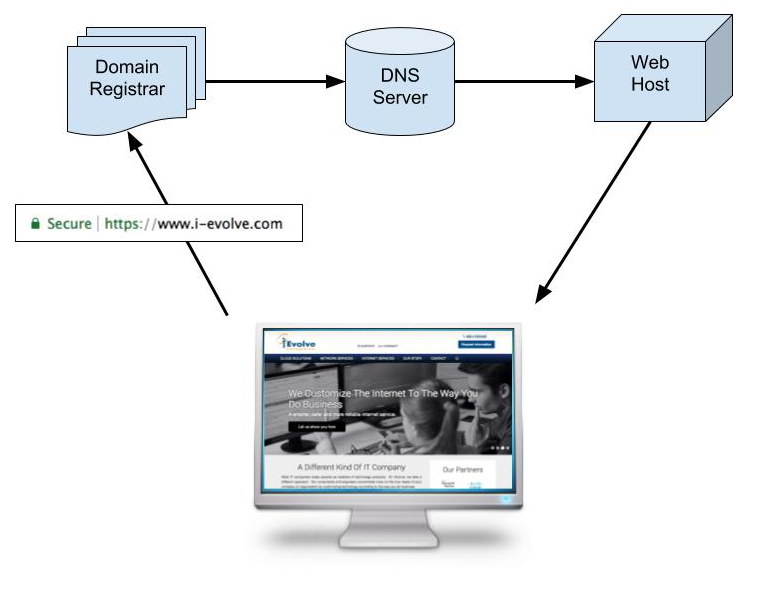
Domain Registrar, DNS Host, and Web Host
There are three core components involved in making a website work:
- Domain Registrar – where your domain name is registered (e.g., GoDaddy, Namecheap).
- DNS Host (nameserver) – manages the DNS records that tell the internet where your domain points.
- Web Host – stores and serves your website files.
Ideally, all three are managed by the same company to reduce complexity. However, it’s common for them to be split across different providers.
When a website moves to a new host, it is critical to:
- Have full administrative access to the domain registration
- Ensure DNS records are updated correctly
- Keep accurate contact information on the domain account